

Introduction
Coastal ecosystems are among the most sensitive and climate-vulnerable environments in the world, particularly in regions experiencing rapid urban and economic growth such as the United Arab Emirates. Rising sea levels, intensifying storms, shifting weather patterns, and increasing coastal development have made shoreline protection a national environmental priority that stands alongside major development agendas
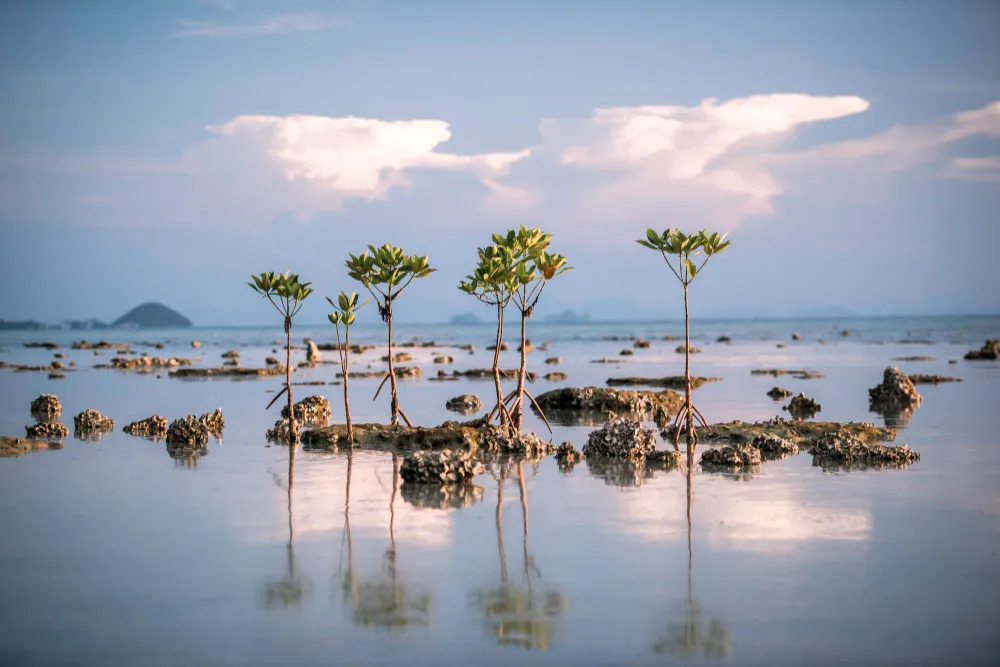
Within this context, mangrove forests play a central and irreplaceable role as the natural first line of defense for coastlines. They are far more than salt-tolerant trees growing along tidal shores. Mangroves represent complex ecological systems with a remarkable capacity to protect coastal land, support biodiversity, and contribute meaningfully to climate resilience.
Natural Coastal Protection
The dense, interlocking root systems of mangrove trees stabilize coastal soil and significantly reduce erosion caused by waves and tidal currents. These roots bind sediments together, strengthening shorelines and preventing land loss over time.
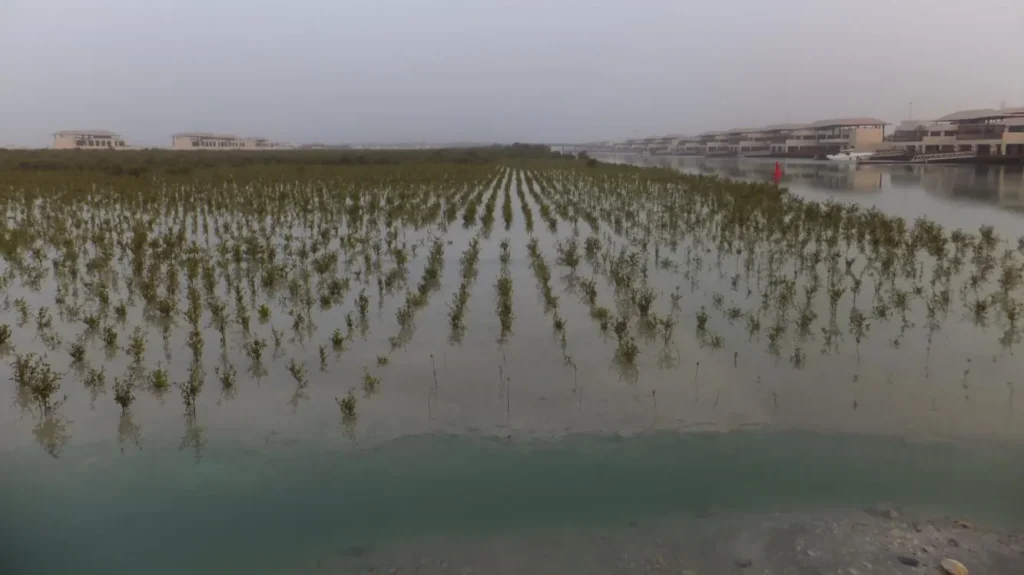
At the same time, mangrove forests act as natural wave barriers. Their above-ground root structures and tree trunks absorb and dissipate wave energy before it reaches inland areas. During storms and high tides, mangroves reduce the force of incoming waves, lowering the risk of flooding and infrastructure damage.
For this reason, many coastal nations increasingly rely on mangrove restoration as a more sustainable and cost-effective alternative to traditional hard infrastructure such as concrete seawalls and breakwaters. Unlike artificial barriers, mangroves evolve, regenerate, and strengthen over time, delivering long-term ecological and economic value.
Biodiversity and Ecological Balance
Beyond their physical protective function, mangrove forests are biodiversity hotspots. They provide critical nursery habitats for fish larvae, crustaceans, and other marine species. Many commercially important fish species depend on mangrove ecosystems during early stages of life.
Mangroves also support migratory and resident bird populations, in addition to various terrestrial and marine organisms. This ecological richness strengthens marine food chains and contributes directly to environmental stability.
Healthy mangrove ecosystems therefore extend their impact beyond environmental protection. They support fisheries, strengthen marine economies, and contribute indirectly to food security. Their value lies not only in what they protect, but in what they sustain.
Blue Carbon and Climate Resilience
Mangrove forests are among the most efficient carbon-storing ecosystems on Earth. This carbon storage capacity, known as blue carbon, refers to the carbon captured and stored within coastal and marine ecosystems such as mangroves and seagrass beds.
Mangroves store significant amounts of carbon both in their biomass and within the surrounding soil. Unlike many terrestrial forests, mangrove soils can lock carbon away for centuries if left undisturbed. Scientific research indicates that mangroves can store several times more carbon per hectare than many land-based forest systems.
In a country like the UAE, where climate mitigation and Net Zero 2050 objectives form a national priority, mangrove expansion represents a strategic environmental investment. By restoring and expanding mangrove forests, the nation strengthens its natural carbon sinks while enhancing coastal protection and biodiversity simultaneously.
A National Environmental Vision
Mangrove conservation in the UAE is not a recent initiative. It reflects a long-standing environmental philosophy that dates back to the vision of the Founding Father, Sheikh Zayed bin Sultan Al Nahyan, who recognized early the ecological importance of mangrove cultivation and coastal protection.
Today, this legacy continues through large-scale national initiatives aimed at expanding mangrove coverage, strengthening blue carbon capacity, and positioning the UAE as a global leader in nature-based climate solutions.
Mangrove projects now form a critical component of broader environmental and climate strategies, reinforcing the country’s commitment to sustainability and long-term ecological resilience.
Beyond Planting: The Importance of Scientific Implementation
While mangrove expansion is essential, successful outcomes require far more than planting seedlings. Effective mangrove restoration depends on:
- Careful site selection based on hydrological and soil conditions
- Understanding tidal dynamics and sediment flow
- Selecting appropriate native species
- Long-term monitoring and adaptive management
- Regulatory compliance and ecosystem impact assessments
Without scientific planning and responsible execution, mangrove projects risk low survival rates or unintended ecological consequences.
True sustainability requires field expertise, ecological understanding, and integrated management systems that ensure forests not only grow, but thrive.
Conclusion
At Nature Environmental & Agricultural Solutions (NEAS), we bring more than 38 years of field expertise in mangrove cultivation, ecosystem management, and integrated environmental project delivery across the UAE.
We view mangroves not merely as an environmental initiative, but as a long-term investment in coastal protection, biodiversity enhancement, and sustainable national development.
If you are planning a coastal or environmental project, or seeking to implement nature-based solutions responsibly and effectively, we invite you to request a specialized consultation with the Nature team.